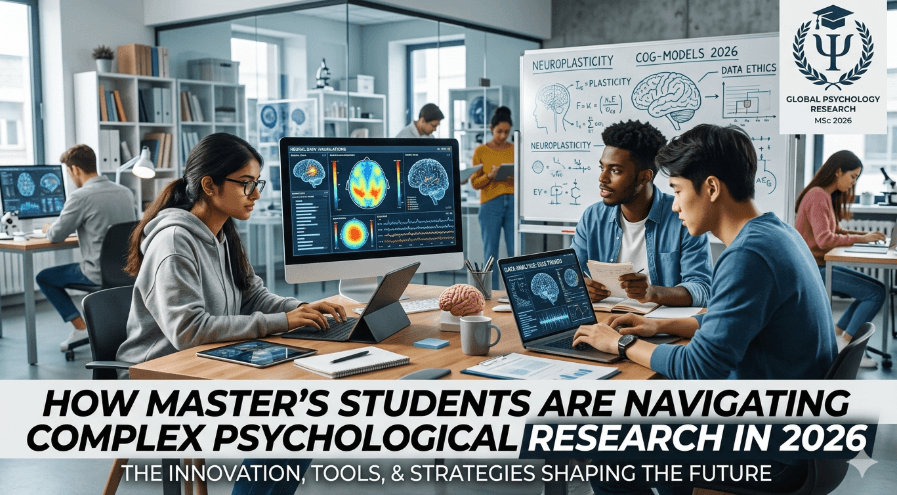
The landscape of psychological research in 2026 has undergone a seismic shift, driven by the integration of advanced neuroimaging, big data analytics, and the ethical imperatives of a post-pandemic society. For Master’s students across the United States, from the hallowed halls of Ivy League institutions to innovative state universities, the challenge is no longer just about understanding human behavior—it is about synthesizing vast, disparate data streams into coherent, actionable insights.
Modern graduate programs now demand a level of digital literacy and statistical rigor that was once reserved for doctoral candidates. Students are increasingly utilizing machine learning algorithms to parse through longitudinal datasets, looking for patterns in cognitive decline or social polarization. As these academic requirements intensify, many students find that the bridge between raw data and a polished psychology essay writer level submission is narrower than ever. The ability to articulate “The Why” behind the data has become the hallmark of the successful 2026 graduate candidate.
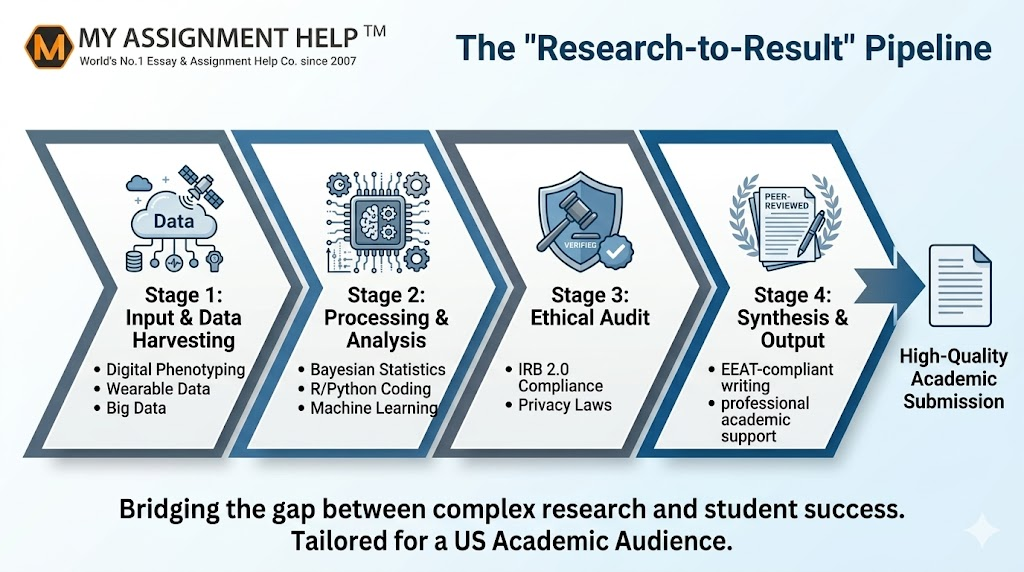
Navigating these complexities requires more than just clinical knowledge; it requires a mastery of the “Research-to-Synthesis Pipeline”. In a typical Master’s curriculum today, a student might be expected to utilize Bayesian modeling or R-coding to validate a hypothesis. When the cognitive load becomes overwhelming, seeking expert guidance from a trusted platform like myassignmenthelp is often the strategic choice for students who need to Buy College Essay services to maintain their competitive edge while focusing on their primary lab work.
The Integration of Big Data and Behavioral Metrics
In 2026, the reliance on self-reporting in psychology has diminished in favor of “Digital Phenotyping”. Master’s students are now analyzing passive data from smartphones and wearable devices to study real-time behavioral patterns. This transition has increased the complexity of the research process. For instance, a study on anxiety no longer just relies on the GAD-7 scale but might include heart rate variability (HRV) metrics and screen-time metadata.
According to recent data from the American Psychological Association (APA), approximately 68% of graduate research projects now involve some form of computational modeling. This shift ensures that the findings are robust and reproducible, aligning with the “Open Science” movement that has taken the US academic world by storm. However, the technical debt of learning these tools can detract from the qualitative analysis—the human element that psychology is built upon.
Addressing the Replication Crisis with Open Science
Master’s students are at the forefront of solving psychology’s “Replication Crisis”. By utilizing pre-registration of their studies on platforms like the Open Science Framework (OSF), students in 2026 are ensuring that their work is transparent. This involves publishing their hypotheses and analysis plans before data collection begins, a practice that boosts the Trustworthiness (the ‘T’ in E-E-A-T) of their academic output.
The mathematical rigor required is substantial. Students often use the formula for effect size,
$$d = \frac{M_1 – M_2}{SD_p}$$
, to quantify the significance of their findings rather than relying solely on p-values. This nuance is what separates a mediocre paper from a high-impact thesis.
Key Takeaways for Graduate Researchers
- Adopt Computational Tools early: Proficiency in Python or R is no longer optional for psychology students.
- Focus on E-E-A-T: Ensure your arguments are backed by high-authority, peer-reviewed sources from the last 3–5 years.
- Leverage Professional Synthesis: Use academic support services to refine the narrative structure of your findings.
- Ethics First: Digital data collection requires a deeper understanding of privacy laws (GDPR/CCPA) and IRB protocols.
The Role of Academic Support in 2026
The sheer volume of work—balancing clinical practicums, lab hours, and comprehensive exams—has led to a rise in collaborative academic support. It is not uncommon for a student to conduct groundbreaking research but struggle with the specific formatting and narrative flow required for high-tier journal submission. Using professional services to audit and refine these documents is becoming a standard part of the “academic polish” phase.
See also: Why International Students are Flocking to Online Academic Mentorship Programs
Frequently Asked Questions
Q: What is the biggest challenge for psychology Master’s students in 2026?
A: The integration of multidisciplinary skills, specifically combining traditional clinical psychology with data science and ethical AI usage.
Q: Why is E-E-A-T important in psychological writing?
A: Psychology is a “Your Money or Your Life” (YMYL) topic. Google and academic institutions prioritize content that shows Expertise and Authoritativeness to prevent the spread of misinformation.
Q: How can students ensure their research is plagiarism-free?
A: By using advanced similarity detection tools and focusing on original data synthesis rather than over-quoting existing literature.
About the Author:
Dr. Sarah Jenkins is a Senior Content Strategist at myassignmenthelp, specializing in behavioral science and academic communication. With over 12 years of experience in the US higher education sector, she helps graduate students navigate the complexities of research synthesis and professional academic writing.
References:
- American Psychological Association (2025). Trends in Graduate Psychology Curricula.
- National Center for Education Statistics (2026). The Evolution of Social Science Research in the Digital Age.
- Open Science Framework (2026). Transparency in Student-Led Research.